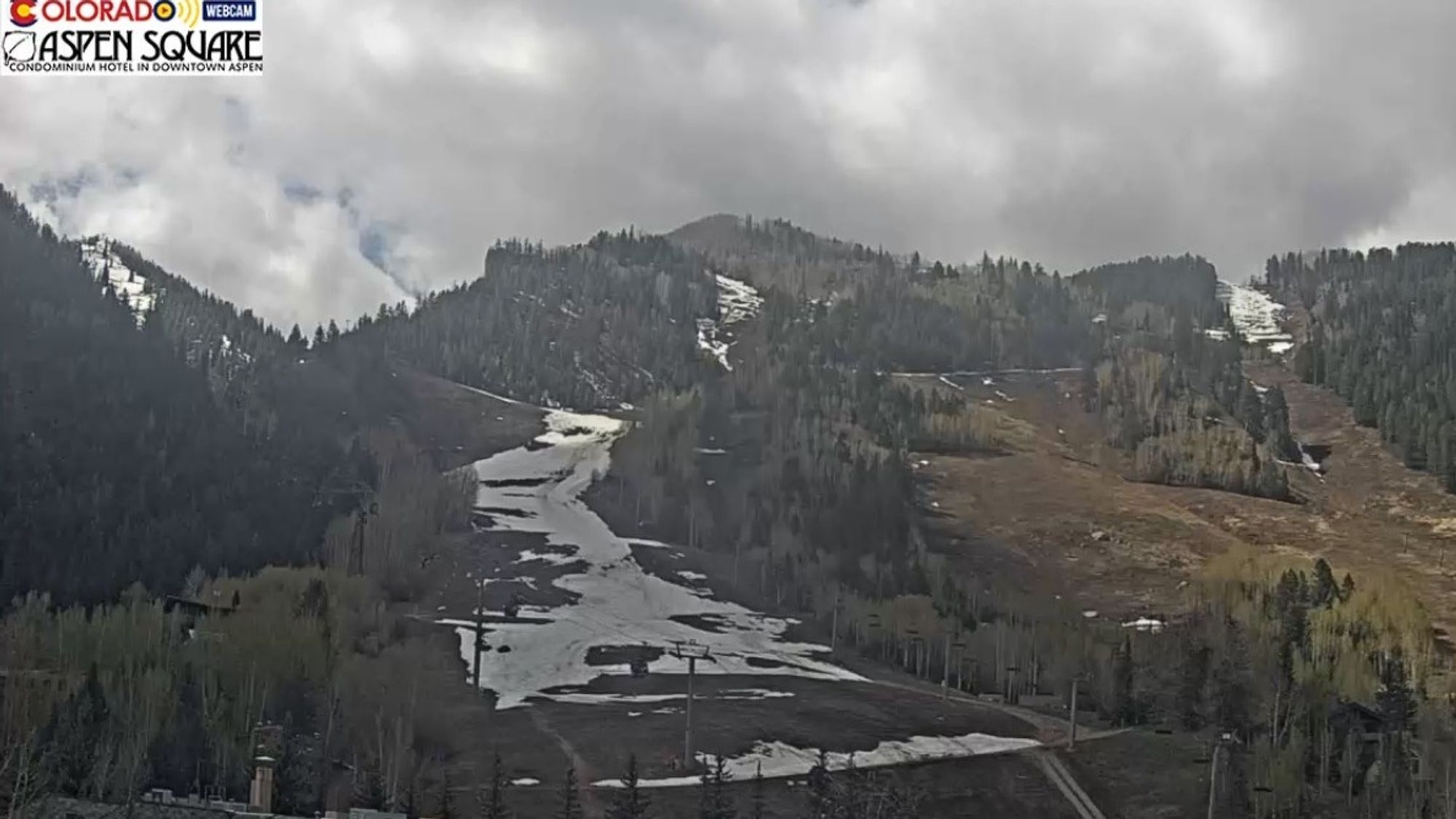
In the Alps, it took quite a while this season before the snowpack really started to build. In the Rockies — and especially in Colorado — that moment simply never came. In this post, a brief look at just how dramatic this season has been there, along with a reference to the American podcast Where to Ski , where we were recently invited to talk about it.
The Rockies heading out of winter with record-low snow
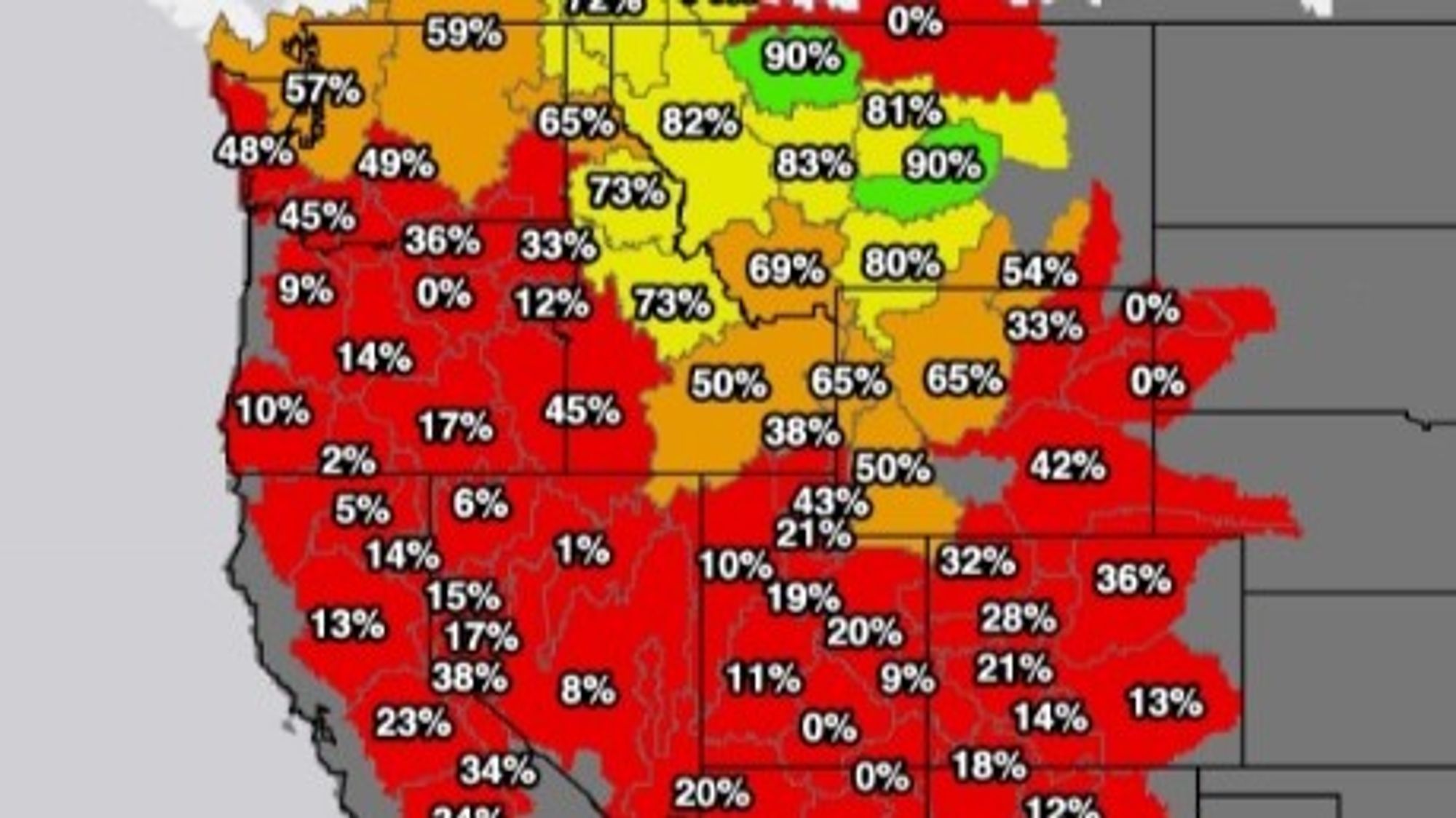
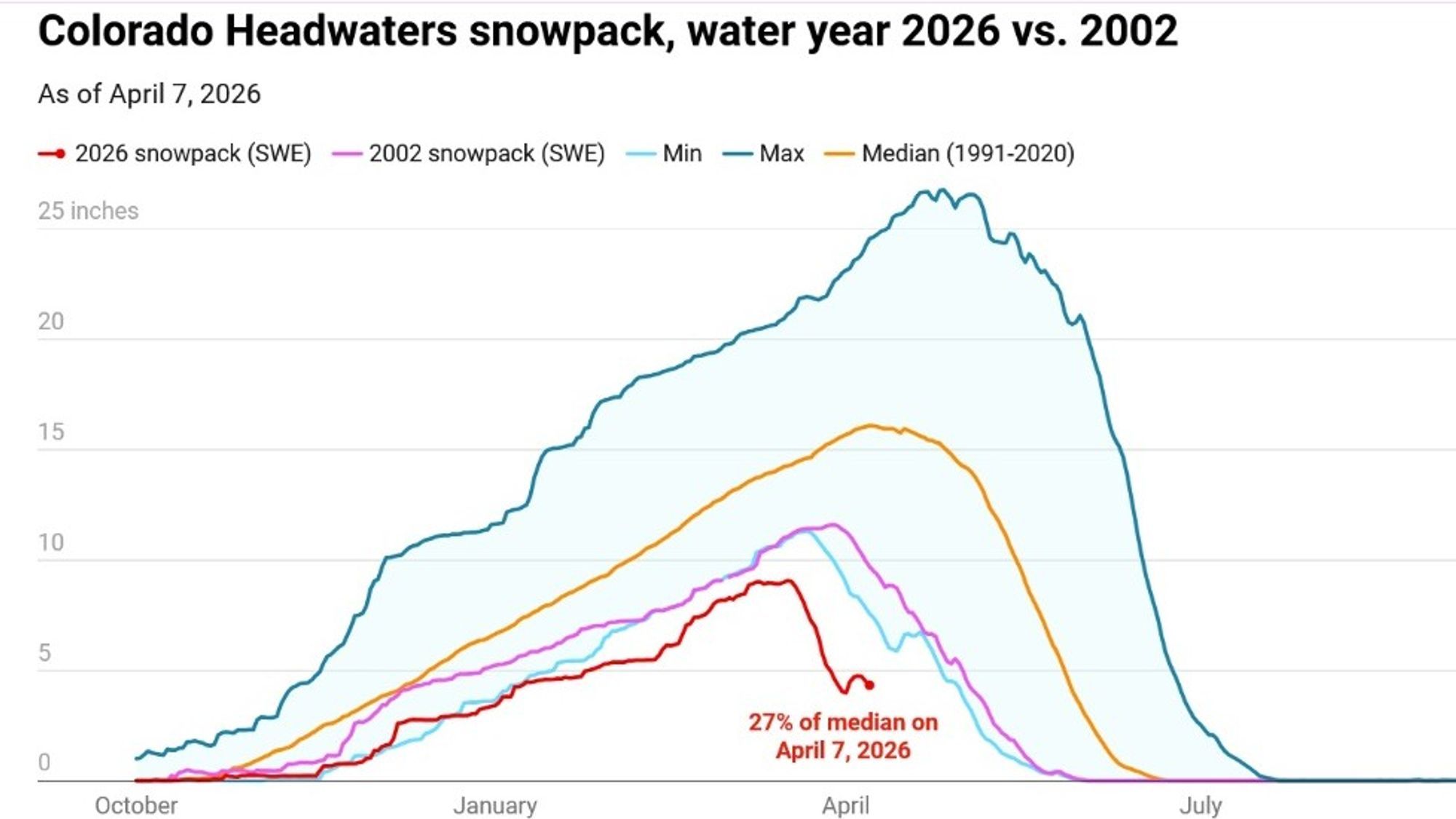
It’s hard to imagine just how little snow remains across large parts of the Rocky Mountains right now. After a dry winter, a record-warm March followed — and the consequences have been significant. Ski resorts closed much earlier than usual, and water supply has become a serious concern, as it heavily depends on rivers fed by snowmelt — which this year is severely lacking.
Very limited snowfall during winter
With a weak La Niña pattern over the Pacific, the odds already pointed toward a drier-than-normal winter in the US Rockies. But the extent of it came as a surprise. Persistent high-pressure systems dominated much of the winter. And when precipitation did arrive, snow levels were often much higher than usual.
Snowmaking: a key difference
In the US, ski resorts rely far more on natural snowfall than in Europe. That makes dry and warm conditions much more problematic than in the Alps. Here many resorts depend for 40–80% on artificial snow, especially in regions like the Dolomites, where dry spells of several weeks are quite normal. This was also why skiing conditions during the Christmas holidays were still quite good: it was cold enough to run the snow guns, and while that didn’t help off-piste conditions (except in the southwestern Alps where natural snow fell), the pistes were generally in good shape.
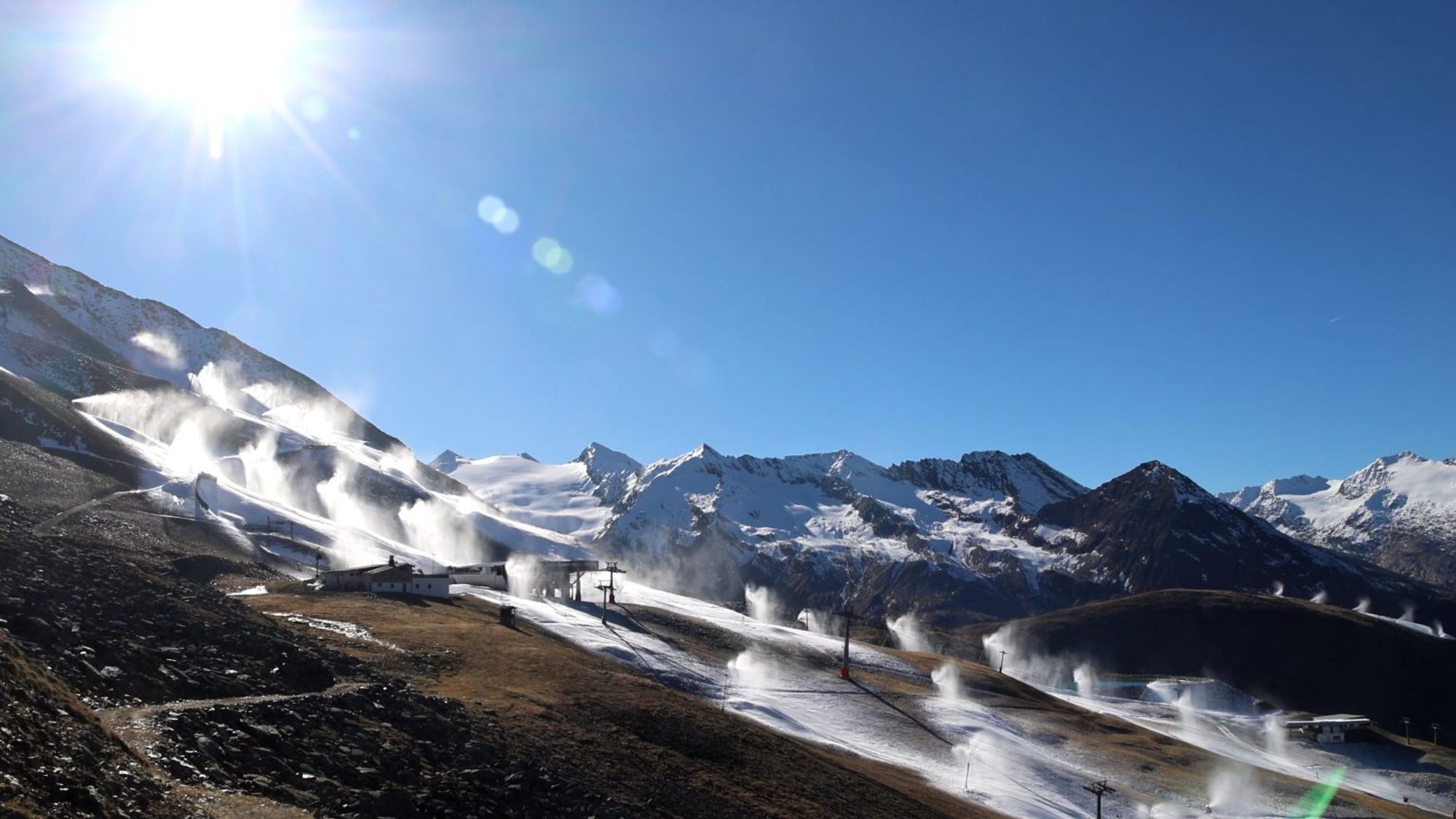
In contrast, snowmaking in the US typically covers 25% or less of the terrain, mainly focusing on key connecting runs. With so little natural snowfall this season, many resorts opened only limited terrain and did so later than usual — and then closed early again in March.
This is something to keep in mind when planning a trip to the Rockies. I once went skiing there in early December and initially felt reassured: plenty of resorts were open. But a closer look told a different story. Many resorts open gradually, with only a handful of runs available at first. How quickly more terrain opens depends heavily on snowfall — much more so than in Europe. In snow-rich regions like Whistler (Canada), Big Sky (Montana) or Jackson Hole (Wyoming) this usually isn’t an issue. But the further south you go, the less frequent snowfall becomes. I was in Telluride (southwest Colorado) — and although I got lucky, a large part of the terrain was still closed that early in the season.
A record-warm March
So, a dry winter — and then came March.
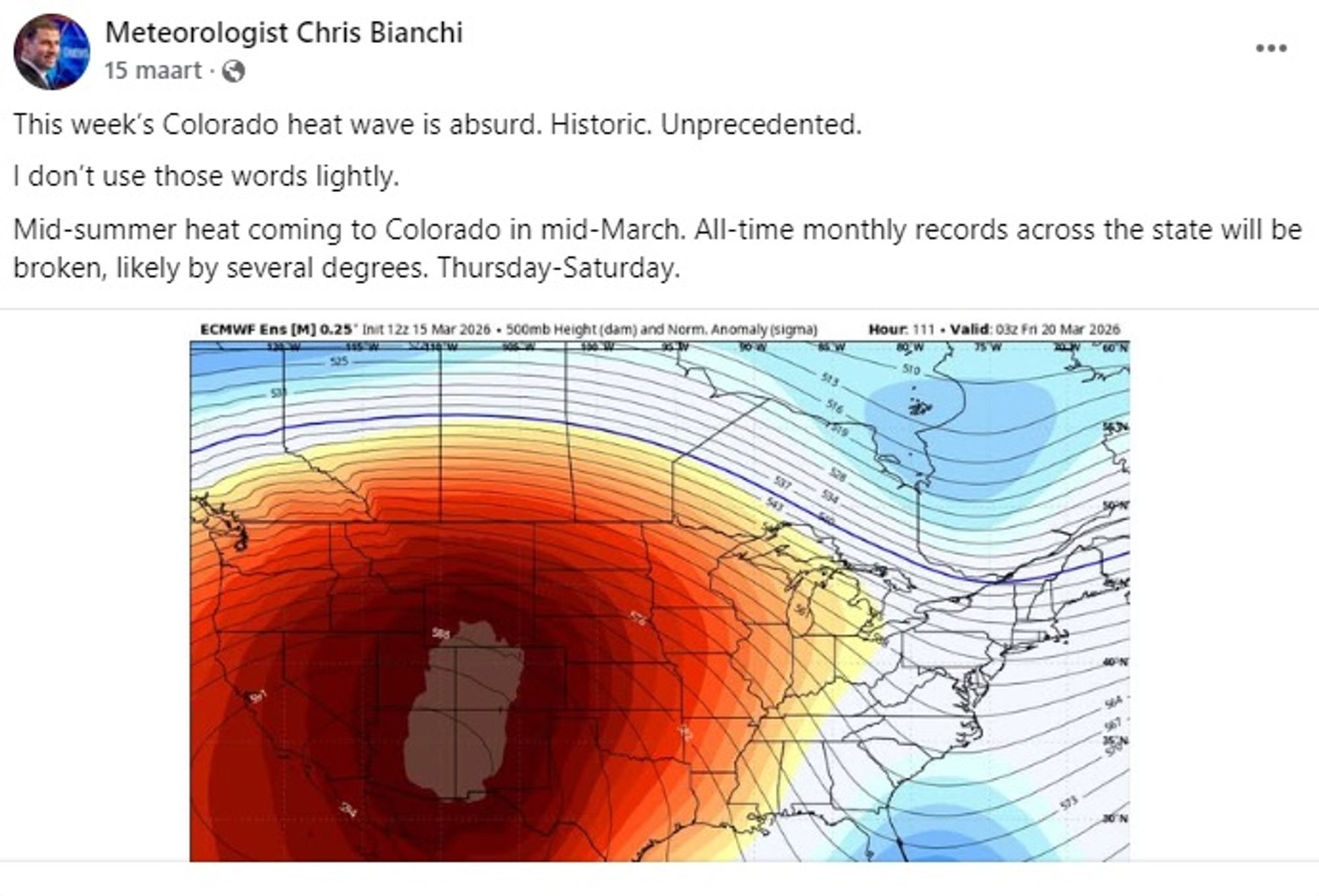
Temperature records across Colorado were shattered, and not by a small margin. Temperatures climbed to levels more typical of a summer heatwave. At many weather stations, it became warmer than ever recorded in March. Even more striking: for an entire week, temperatures rose higher than the previous daily record highs. The snow quite literally disappeared before our eyes. Within just two weeks, the average snowpack (in terms of water content) decreased by about 125 millimeters — roughly twice the largest two-week drop ever previously recorded in March.
Water supply under pressure
Because of the rapid snowmelt, the snowpack disappeared much earlier than usual in many places. Melting snow typically leads to rising river levels, which is normally good news for water management in the region. A large portion of the water supply depends on these rivers. This year, however, rivers started from already low levels. They did rise briefly due to early snowmelt, but peak discharge occurred much earlier than normal — typically this happens in late April or May, whereas now river levels began dropping again already in March. This has set off alarm bells across the region, and water restrictions are now being implemented.
Listen to the “Where to Ski” podcast
This unusual winter prompted the ski enthusiasts behind Where to Ski to dedicate a podcast episode to the remarkable weather patterns. When they learned about the late-season north stau in the Alps and the excellent conditions there, we quickly got in touch — and ended up joining the podcast to share insights on the Alpine winter as well.
Interested in listening?
You can find the podcast here
.